

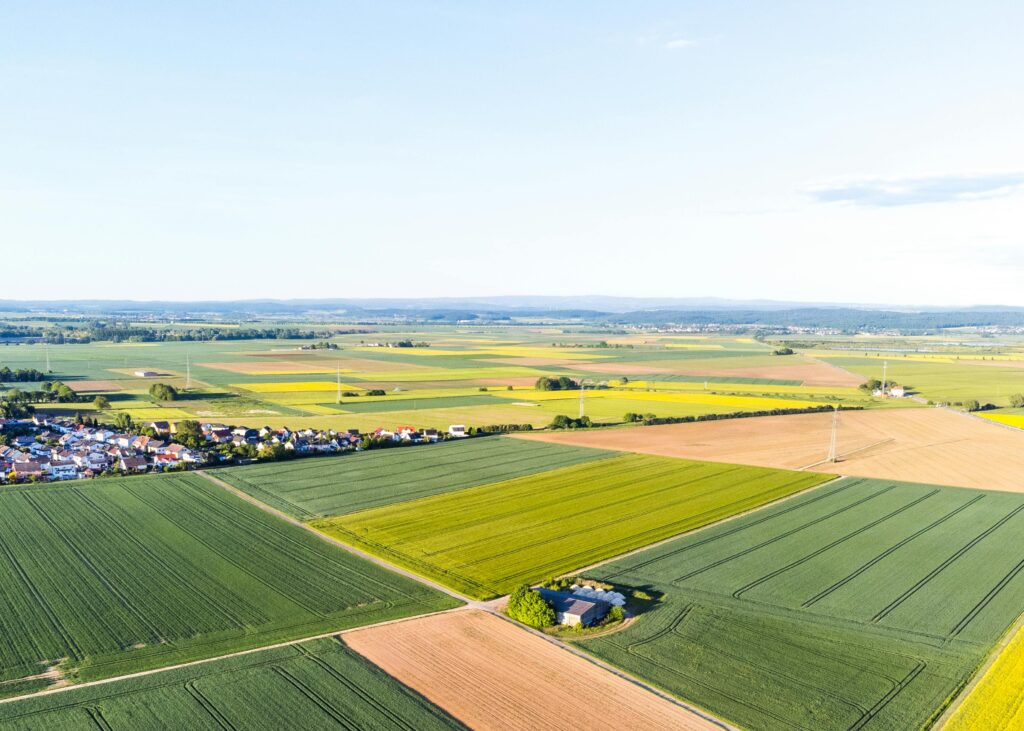
For decades, Saskatchewan has been described in contrasts.
Urban and rural.
City and small town.
Main Street and grid road.
These distinctions are familiar—but they are increasingly unhelpful.
Because Saskatchewan’s economy does not operate as two separate systems. It operates as one interconnected engine, powered by both urban and rural strengths. When those engines are aligned, the province moves forward. When they are not, progress slows for everyone. As Saskatchewan looks toward growth, resilience, and long term competitiveness, it’s time to move beyond false divides and start designing for the system we actually have.
The Myth of “Urban vs. Rural”
The idea that urban and rural communities are in competition—for people, investment, or attention—shows up often in policy debates and public conversation. But it doesn’t reflect lived reality.
People commute across municipal boundaries every day. Businesses operate across regions, not postal codes. Supply chains, labour markets, and capital flows do not stop at town limits. A producer in west central Saskatchewan relies on urban processing, logistics, and export capacity. A city depends on rural Saskatchewan for food security, energy, resources, and export revenue. Families routinely move between community types over the course of a lifetime.
This is not a hierarchy. It is interdependence. “Urban and rural Saskatchewan aren’t competing economies—they are interdependent parts of the same system.” Elan Buan, Schollie Research and Consulting
Two Engines, Distinct Roles
While Saskatchewan functions as one system, different places play different roles. Rural and smaller communities are often where production begins:
- Agriculture and agrifood
- Energy and mining
- Forestry and bioeconomy
- Tourism, culture, and landbased assets
Urban centres such as Saskatoon and Regina tend to concentrate capacity:
- Post secondary education and research
- Specialized labour and professional services
- Health care, finance, and governance
- Transportation, logistics, and investment capital
Neither role works well without the other. Rural Saskatchewan depends on urban services, markets, and institutions to scale and sustain production. Urban Saskatchewan depends on rural regions for the assets that drive exports, employment, and economic resilience. “Strong cities need strong regions—and strong regions need strong cities.”Mayor Gerald Aalbers, City of Lloydminster
Where the System Breaks Down
If the interdependence is so clear, why does the system feel strained? Because many of Saskatchewan’s policies, programs, and investments were designed as if urban and rural were separate worlds. We plan infrastructure by jurisdiction rather than by economic corridor. We fund initiatives as “urban” or “rural,” even when outcomes are regional. We measure success locally, despite provincewide labour and housing challenges.
The result is familiar:
- Labour shortages across the province, even where talent exists nearby
- Housing pressure in cities while surrounding communities have capacity
- Industrial land, workers, and services planned in isolation from one another
These are not community failures. They are system design challenges.
Designing for One Engine, Not Two Camps
The question facing Saskatchewan is no longer:
- How do we support urban growth? or
- How do we save rural communities?
The real question is: How do we design systems that allow urban and rural strengths to reinforce each other—by default?
That means:
- Regional labour and training pipelines that reflect how people actually live and work
- Infrastructure planned around economic function and corridors, not just boundaries
- Investment readiness that considers ecosystems, not single sites
- Governance and funding models that reward collaboration instead of competition
This is not about erasing differences between communities. It’s about aligning them.
Why This Moment Matters
Saskatchewan is at a critical moment.
Demographic shifts, labour constraints, climate risk, and global competition for capital are all intensifying at once. Regions that remain fragmented will struggle to respond. Regions that act as integrated systems will be better positioned to adapt and grow.
Saskatchewan has a unique advantage: a strong culture of collaboration, deep connections between communities, and a shared interest in longterm prosperity. But realizing that advantage requires intentional design—and a willingness to move past outdated narratives. “Continued success in Saskatchewan will depend on how well our communities work together.” Jean Marc Nadeau, CEO, Saskatchewan Urban Municipalities Association
One Engine, Shared Responsibility
If Saskatchewan’s economy is powered by two engines, responsibility is shared.
Shared by urban and rural leaders.
Shared by Indigenous and non Indigenous communities.
Shared by business, government, and institutions.
Growth is not a zerosum game between places. It is a collective outcome of how well the system is designed to work.
When both engines are aligned, Saskatchewan doesn’t just move forward—it moves forward together.